Knitting Lessons in Arlington, MA
Learn to knit with confidence—supportive lessons tailored to your goals, skill level, and schedule.
Knitting can feel a little tricky at first, especially if you want it to look perfect right away, but it becomes relaxing once the basics click. Lessons are paced to the student and the goal. You might want a calm start with the fundamentals, help finishing a project, or a refresh after years away. Knitting can be a great fit for kids and teens who are really motivated to learn the craft, and just as rewarding for adults who want a creative hobby.
Knitting fundamentals that set you up for success
Learn the core skills step-by-step so you can knit confidently, catch common mistakes, and keep making progress between lessons.
-
Cast on & knit stitch (purl when you’re ready)
-
Consistent tension and clean edges
-
Casting off / finishing
-
Fixing common issues (dropped stitches, uneven tension, confusing steps)
-
A simple practice plan between lessons
Great first knitting projects
Start with a project that feels achievable and teaches the skills you’ll use again and again, so you build confidence quickly and enjoy the process.

Practice swatch — focused practice to build muscle memory
focused practice to build muscle memory

Basic hat (easy beanie)
A classic next step if you’re ready for a little shaping (decreases). Can be done knit flat and seamed or in the round.

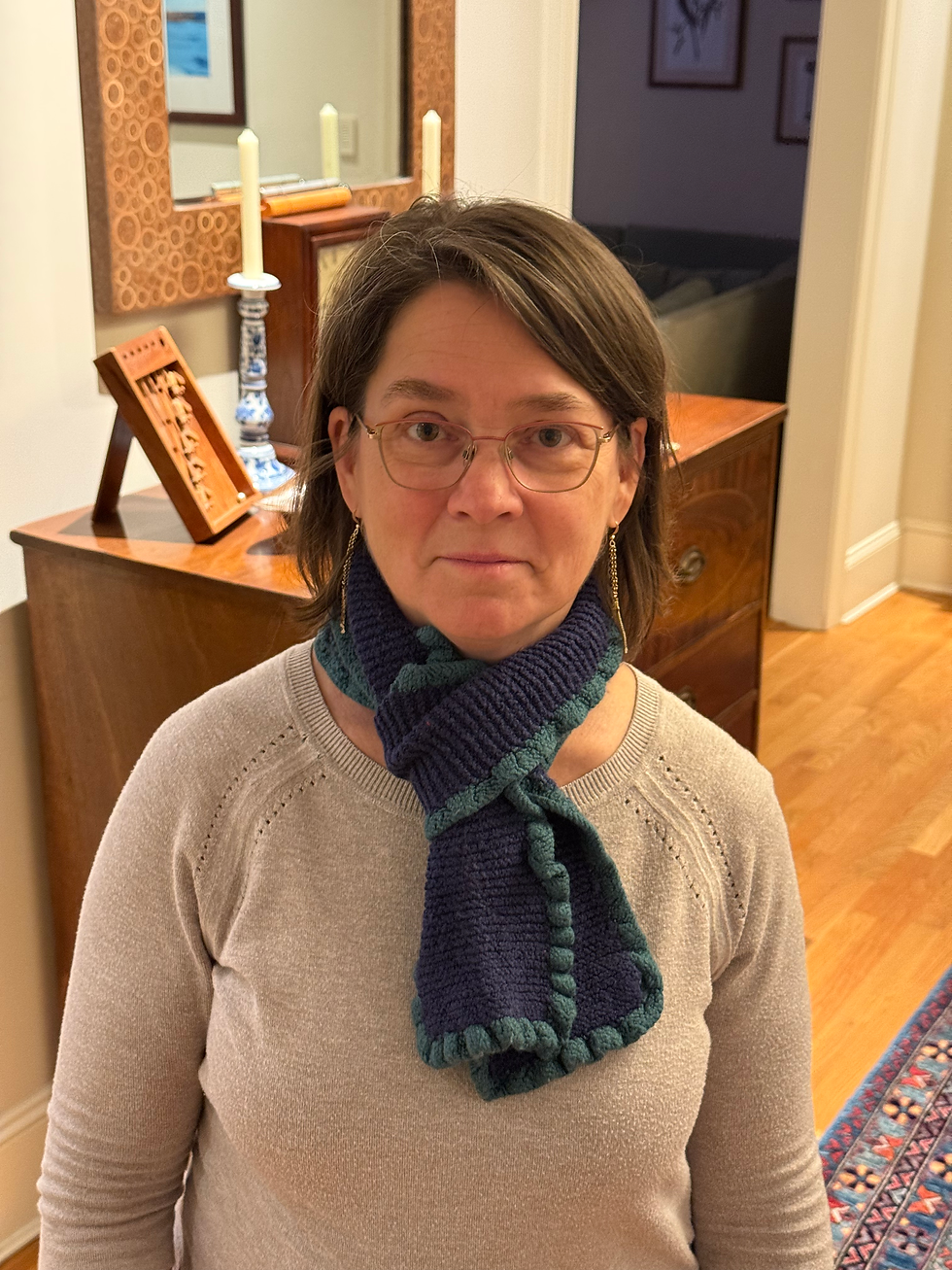
Scarf
satisfying, teaches straight seams and accuracy
Needles + yarn choices that reduce frustration
What needles should I use? Circular needles can feel comfortable and flexible for many beginners. They're lightweight, and very portable
Bamboo vs metal needles? Bamboo needles can help keep stitches from slipping off the needles while learning; metal can feel faster once you’re a more confident knitter.
What yarn is easiest to learn on? Smooth, light-colored yarn wit a heavier weight helps you see your stitches more clearly.
What to expect
Step 1 — Choose a goal
Start with what you want most, whether that’s learning from scratch, finishing a project you already started, or refreshing skills after time away. If you’re not sure, you’ll get a few simple project options that match your comfort level.
Step 2 — Learn the building blocks with hands-on guidance
You’ll practice the core skills that make knitting feel easier, like casting on cleanly, making consistent stitches, and keeping even tension. If something goes wrong, you’ll learn what happened and how to fix it, so you don’t feel stuck.
Step 3- Leave with progress and clear next steps
You’ll leave with visible progress and a simple plan for what to practice between lessons. That might be a short repeatable exercise or a clear next step on your project, so you can keep improving at home without guessing.




1. Is knitting harder than crochet? It can feel harder at first, but it becomes much easier with a steady foundation and practice. Crochet is certainly more forgiving with mistakes, however.
2. Do I need to learn purl stitch right away? No. You can start with knit stitch and add purling when you’re ready.

3. Do you teach kids/teens and adults? Yes—lessons are paced to the student and the project.
4. Can you help me fix mistakes? Yes. Learning to fix mistakes is part of gaining confidence.