Sewing Lessons in Arlington, MA
Learn to sew with confidence. Supportive lessons tailored to your goals, skill level, and schedule.
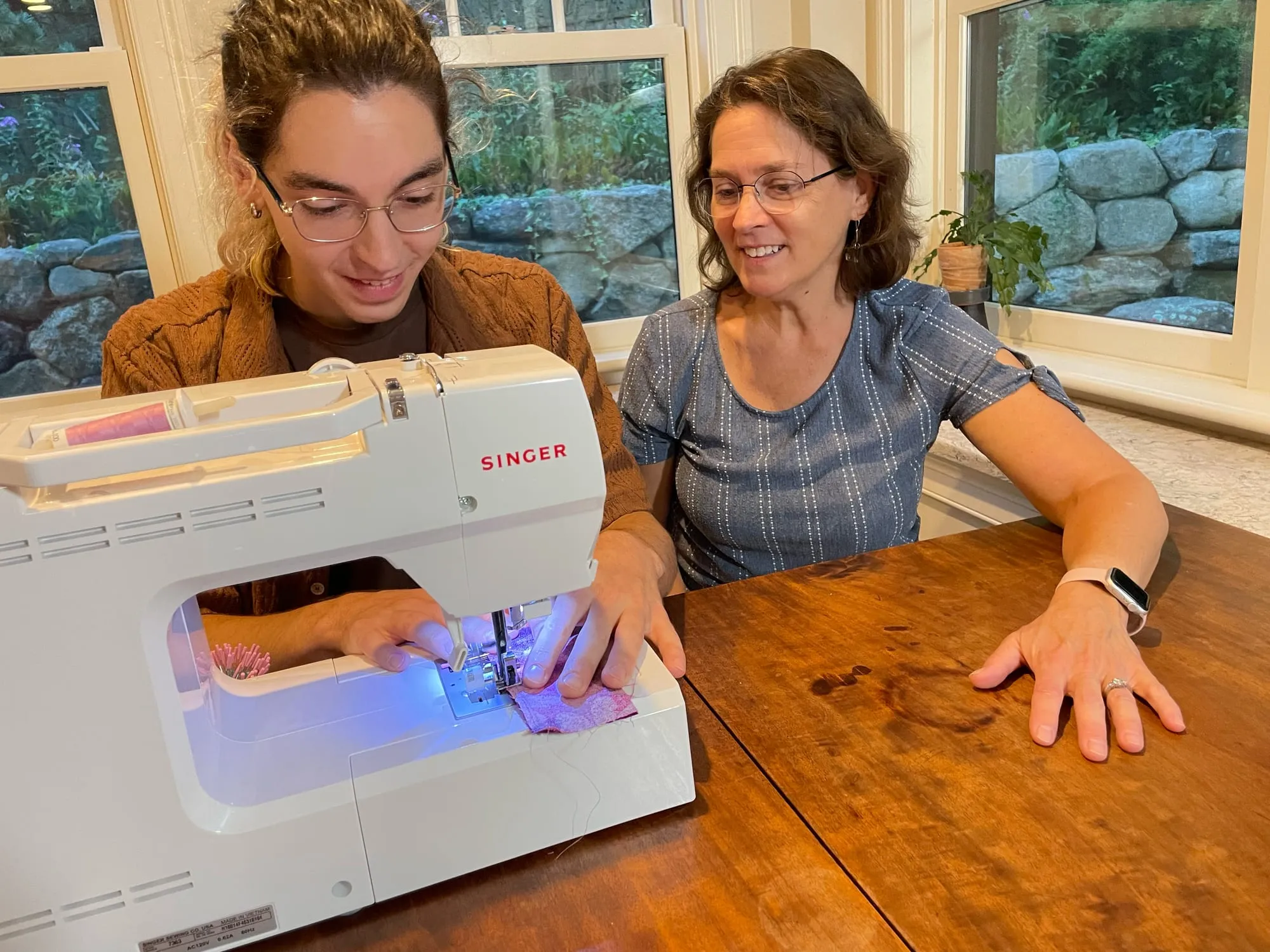
Sewing lessons are designed around you: your project, your pace, and the way you learn best. If you’re brand new, we’ll start with simple fundamentals that build confidence quickly. If you’re returning after years or stuck mid-project, we’ll troubleshoot what’s not working and get you moving forward again.
Sewing can also be a wonderful skill for children and teenagers, building focus, creativity, and real pride in what they make, and it is just as rewarding for adults.
Quilting
Quilting is taught as part of sewing rather than as a separate subject. It builds on skills you need first: accurate cutting, straight seams, consistent seam allowance. It suits people who already have the basics, or who are returning to sewing after time away.
If quilting is what you want to get to, say so at the first lesson and we will work towards it.
Sewing fundamentals without getting overwhelmed
Sewing has a lot of “little things” that can feel confusing at first. Lessons focus on the skills that matter most, so you can make progress fast and understand what you’re doing well enough to keep going at home.
- Sewing machine basics
- Straight stitching and control: speed, guiding fabric, accuracy
- Pattern “translation”: what the pattern instructions mean in real life
- Tools and presser feet, and what on earth they all do
- Fixing common mistakes, and building problem-solving habits
Great first sewing projects
We’ll choose a first project that feels achievable and teaches the right fundamentals. If you already have a goal, we’ll work toward that instead.
- Four-patch pillow: satisfying, and teaches straight seams and accuracy
- Zipper pouch: a fun level-up once the basics feel solid
- Tote bag: practical construction skills, and something you’ll actually use
- Bucket hat: a little harder than the three above, and a great skill builder once you feel comfortable
What to bring, and what helps
Do I need a sewing machine? Not necessarily. If you have one, we can learn it together. If you’re shopping, tell me your budget and goals and I’ll help you choose something practical.
What should I bring to the first lesson? Bring your machine if you have one, along with its accessories, and your project, pattern, notions and fabric if you’re working on something. If you’re starting from scratch, I can recommend simple materials for a first project.
Choosing a sewing machine
Try to get a used machine on Facebook Marketplace or somewhere similar. They’re much cheaper, but make sure you know it works before you buy it. Also make sure you have access to a manual, which all machines come with and which you can usually find online, and that you’re getting the attachments that go with it.
Sewing machines are like cars. Some are really poorly made, and some are dream machines.
Basic: very few stitch options, and a reverse button. Around $100.
Mid tier: everything a basic machine has, plus a button that raises and lowers the presser foot, a needle threader, speed controls and twin-needle capability. Between $250 and $350.
High end: everything above, plus features like a knee bar that raises and lowers the presser foot with your knee, a thread cutter, a large touch screen, and lots and lots of fancy stitches, including the alphabet. Expect to spend well over $1,000.
Notions worth having
Must-haves. A seam ripper, a seam gauge, good sewing scissors (Gingher, Singer and Fiskars are all reliable), pins (longer are better), an iron and ironing board, thread, hand sewing needles, and spare machine needles such as Schmetz or Organ. Newer sewers have a tendency to break machine needles, so spares matter more than you’d think.
Nice, but not essential. Small scissors, and a higher-end ergonomic seam ripper. The ones that come with machines are not very good.
If quilting is a future goal, you’ll also want a rotary cutter (Olfa is good), acrylic rulers (I like Creative Grids), and a self-healing cutting mat. They make quilting more efficient, accurate and enjoyable.
What to expect
Step 1: Share your goal
A first project, learning the machine, finishing something, or a project rescue.
Step 2: Learn in the style that fits you
Some people like to watch first, others learn best by trying right away. Either way, you’ll get calm, clear guidance and quick feedback.
Step 3: Leave with progress and next steps
You’ll leave with visible progress and a simple plan to keep going confidently between sessions.
Common questions
- I'm a complete beginner. Where do we start?
- You'll start with machine basics and a simple first project that builds confidence quickly.
- Can you help me if I'm stuck mid-project?
- Yes. Bring what you have: project, pattern, machine if possible, and we'll get you back on track.
- Do you teach children, teenagers and adults?
- Yes. Lessons are paced to the student, whether it's a child learning basics or an adult building skills or finishing a project.
- What if I make mistakes?
- That's expected. You'll learn how to spot issues early and fix them without losing momentum.
Winchester and nearby towns
Towns served: Winchester, Arlington, Lexington, Stoneham, Woburn, Burlington, Melrose, Medford.
Get in touch
Or email info@winchesterfiberarts.com or call or text (781) 218-9360.